Beware the Sinister side of Low-Fat Foods

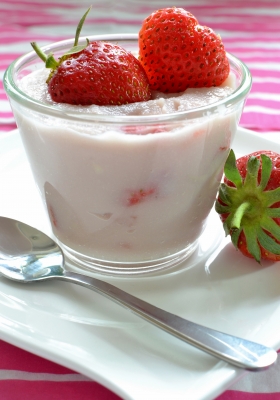
low fat strawberry yogurtWhat on earth could be bad about eating low-fat foods? Quite a lot, as it turns out. Food psychologists Brian Wansink and Pierre Chandon (2006) have discovered that foods labeled as “low fat” can lead to increased consumption and contribute significantly to obesity. How does that happen? The researchers point to two major reasons:

  1. Low fat foods increase perceptions of the appropriate serving size
  2. Low fat foods decrease consumption guilt

In their study, Wansink and Chandon (2006) showed that “all people – particularly those who are overweight – eat more calories of snack food when it is labeled as low fat than when it is labeled as regular.” Food nutrition labels can provide both objective and subjective consumption cues. Objective labels tell us exactly how much of a particular food constitutes a single serving and discreetly packaged items such as a 12 ounce can of soda, make the recommended serving size pretty obvious. Continue reading

Share

Treating Psychological Erectile Dysfunction

Erectile dysfunction (ED) is a characterized by a regular inability to obtain and/or maintain an erect penis during sexual activity. Psychological factors account for 10-20% of all erectile dysfunction cases and are often secondary components in situations where physical causes of the dysfunction are present. Continue reading

Share

Parenting and Family Structure in Jamaica and the Wider Caribbean

jamaican childIn many Western countries, the nuclear family, in which both parents are members of the household, is believed to be ideal. In Jamaica and the wider Caribbean, however, the nuclear family is often the exception rather than the rule. A large proportion of families in the region still consist of only one parent, usually the mother, with fathers adopting a marginal role in child-care and nurturance. According to the UNICEF publication “Situation Analysis of Jamaican Children,” over 45% of the households in Jamaica are female-headed. Such family structures are generally accepted as the norm in the Caribbean, and are often viewed as functional responses to the problems faced by people living in the region. Continue reading

Share

“Tie the Heifer, Loose the Bull”: Gender Inequality in the Caribbean

black woman jamaican womanFor years, the Caribbean has been plagued with the pervasive and enduring problem of gender inequality. Gender, as a social construct, became popular during the 1960’s and 70’s and refers to “a set of qualities and behaviours expected from males and females by society” (United States Agency for International Development [USAID], 2005, p.12). While ‘sex’ refers to differences between males and females which are biologically determined and constant, ‘gender’ refers to those differences which are socially constructed and subject to change. Continue reading

Share

3 Things Your Smile Can Predict about Your Future

smiling teen girlsA smile is a universal symbol of warmth, happiness and positivity which comfortably crosses international boundaries and the most diverse of cultures. Smiles can also influence enormous positive changes in society via the process of mimicry; when we smile, it makes the persons around us want to smile too (Hess & Blairy, 2001, cited in Zhivotovkaya, 2008). Continue reading

Share