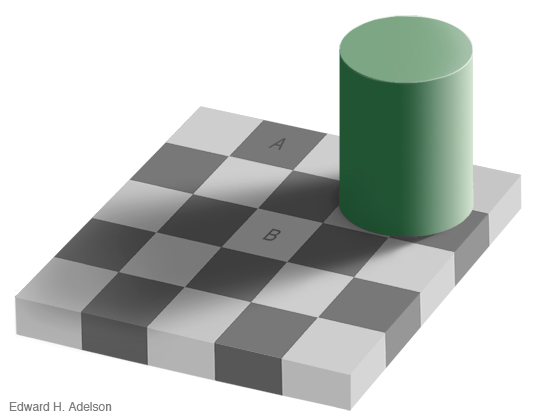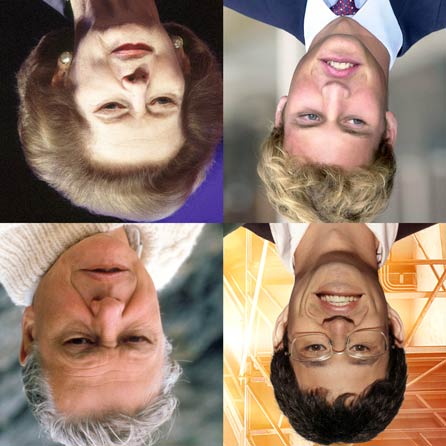
Look carefully…there’s something pretty special about the images above. What’s so great about four upside-down faces you ask? See for yourself. Below we have the same images when positioned right-side-up: Continue reading


Look carefully…there’s something pretty special about the images above. What’s so great about four upside-down faces you ask? See for yourself. Below we have the same images when positioned right-side-up: Continue reading
In the video above Jonathan Grainger discusses an experiment in which he and his colleagues attempted to teach Guinea baboons to distinguish between real English words and strings of letters which are not English words. The baboons learned to recognize words from nonwords, exhibiting human-like orthographic processing. The results indicate that the baboons were focusing on the location of individual letters in the words in order to identify them. Interestingly, this is similar to the approach taken by human readers.

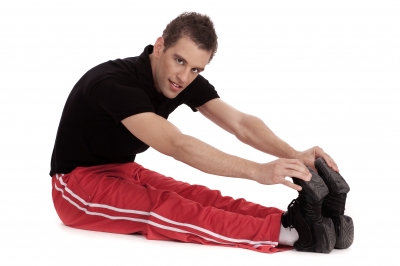
Sports psychology is essentially the study of how the mind affects physical activity and athletic performance. According to the American Psychological Association, “sports psychology addresses the interactions between psychology and sport performance, including the psychological aspects of optimal athletic performance, the psychological care and well-being of athletes, coaches, and sport organizations, and the connection between physical and psychological functioning.” Continue reading
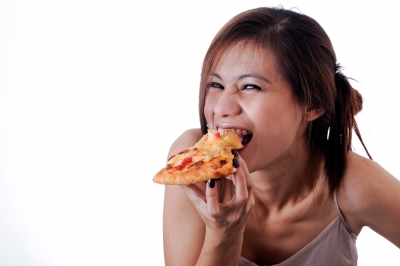
Food psychology is the study of the mental processes behind how and why we eat. While we might think of food consumption primarily from a biological perspective, research has shown that our eating habits are significantly influenced by our perception of food as well as various other social and environmental stimuli. Continue reading